
 CANADA - FR
 U.S.A - EN

Popular Topics
Popular Questions
-
What is a "MERV" rating?
MERV stands for minimum efficiency reporting value. MERV ratings are an air filter industry standard. The higher the MERV rating, the more particles are captured as well as the ability to filter smaller and smaller particles. While higher MERV ratings are better at filtering, air flow is reduced slightly. Residential furnace filters range from MERV 8 to 13.
-
How do I measure my air filter?
Measuring your air filter is easier than you think. One of the best ways to find the size of your air filter, is to check the outside of the filter to find the part number and size. On the outer frame, you will see at least one set of numbers. If you see two sets of numbers, the filter size needed to order replacements is the nominal size, not the actual size. You can ignore the actual size printed on your filter for this task, as the nominal size is the number set needed to order new filters. The other way to find the size of your filter is to measure it yourself. The measurements of the air filter go by length, width and depth. It’s also important to know that the length and width are interchangeable. For example, if your filter is 14 X 20 X 1, it can also be 20 X 14 X 1.
-
Which way does my air filter go?
Our filters are made and packaged to provide the correct instructions on the direction that your air filter should go in. Typically there will be an arrow on the side of the filter which will indicate which way to insert the filter. Some washable filters do NOT have an arrow on the side, because it doesn't matter which way they are inserted. If your filter has a wire backing on one side (ex. A pleated type), the wire backing goes on the DOWNSTREAM side when you install the filter
-
I don't see my air filter size listed. Do you make custom filters?
We realize that your air filter might not be available in a standard size. We can make custom filters (sometimes called "specials" or special sized filters) in any size that you require. Keep in mind that custom filters are made just for you and cannot be returned or exchanged. Please contact us by phone, email or chat to discuss your custom filter requirements.
Please Note
· Custom filters are made just for you! No exchanges or returns.
· Please measure accurately!
· Made to the exact measurements you specify
· Custom filters may take up to 1 week to manufacture and ship.
· Accelerated shipping options are not available.
· 1" custom filters will be ⅞" in thickness,
· 2" custom filters will be 1¾" in thickness,
· 4" custom filters will be 3¾" in thickness.
· The manufacturing of extra large sizes may consist of more than one filter taped together.
-
How often should I change my air filters?
If you're using a standard 1" or 2" air filter, you should regularly replace your filter once every three months (at a minimum). Depending on certain factors, such as how many pets are in your household and how polluted the general area you live in is, it might be beneficial to change more frequently, such as every one to two months. 4-6" filters should be changed every four to six months. If you have pets, you may have to change your filter more frequently.

Popular Questions
Popular Questions
-
What is a "MERV" rating?
MERV stands for minimum efficiency reporting value. MERV ratings are an air filter industry standard. The higher the MERV rating, the more particles are captured as well as the ability to filter smaller and smaller particles. While higher MERV ratings are better at filtering, air flow is reduced slightly. Residential furnace filters range from MERV 8 to 13.
-
How do I measure my air filter?
Measuring your air filter is easier than you think. One of the best ways to find the size of your air filter, is to check the outside of the filter to find the part number and size. On the outer frame, you will see at least one set of numbers. If you see two sets of numbers, the filter size needed to order replacements is the nominal size, not the actual size. You can ignore the actual size printed on your filter for this task, as the nominal size is the number set needed to order new filters. The other way to find the size of your filter is to measure it yourself. The measurements of the air filter go by length, width and depth. It’s also important to know that the length and width are interchangeable. For example, if your filter is 14 X 20 X 1, it can also be 20 X 14 X 1.
-
Which way does my air filter go?
Our filters are made and packaged to provide the correct instructions on the direction that your air filter should go in. Typically there will be an arrow on the side of the filter which will indicate which way to insert the filter. Some washable filters do NOT have an arrow on the side, because it doesn't matter which way they are inserted. If your filter has a wire backing on one side (ex. A pleated type), the wire backing goes on the DOWNSTREAM side when you install the filter
-
I don't see my air filter size listed. Do you make custom filters?
We realize that your air filter might not be available in a standard size. We can make custom filters (sometimes called "specials" or special sized filters) in any size that you require. Keep in mind that custom filters are made just for you and cannot be returned or exchanged. Please contact us by phone, email or chat to discuss your custom filter requirements.
Please Note
· Custom filters are made just for you! No exchanges or returns.
· Please measure accurately!
· Made to the exact measurements you specify
· Custom filters may take up to 1 week to manufacture and ship.
· Accelerated shipping options are not available.
· 1" custom filters will be ⅞" in thickness,
· 2" custom filters will be 1¾" in thickness,
· 4" custom filters will be 3¾" in thickness.
· The manufacturing of extra large sizes may consist of more than one filter taped together.
-
How often should I change my air filters?
If you're using a standard 1" or 2" air filter, you should regularly replace your filter once every three months (at a minimum). Depending on certain factors, such as how many pets are in your household and how polluted the general area you live in is, it might be beneficial to change more frequently, such as every one to two months. 4-6" filters should be changed every four to six months. If you have pets, you may have to change your filter more frequently.
Order & Shipping
Shipping Policy
-
Domestic Shipping Policy
Shipment processing time
All orders are processed within 2-3 business days. Orders are not generally shipped on weekends or holidays.
If we are experiencing a high volume of orders, shipments may be delayed by a few days. Please allow additional days in transit for delivery. If there will be a significant delay in shipment of your order, we will contact you via email or telephone.
Shipping rates & delivery estimates
Shipping charges for your order will be calculated and displayed at checkout.
Delivery delays can occasionally occur especially during peak holiday periods.
Shipment confirmation & Order tracking
You will receive a Shipment Confirmation email once your order has shipped containing your tracking number(s).
Customs, Duties and Taxes
AirFiltration is not responsible for any customs and taxes applied to your order. All fees imposed during or after shipping are the responsibility of the customer (tariffs, taxes, etc.).
Damages
AirFiltration is not liable for any products damaged or lost during shipping. If you received your order damaged, please contact the shipment carrier to file a claim.
Please save all packaging materials and damaged goods before filing a claim.

-
International Shipping Policy
We currently only ship to Canada and the United States of America.
-
Returns Policy
Our Return & Refund Policy provides detailed information about options and procedures for returning your order.
Returns & Exchanges
Returns & Exchanges
-
RETURNS
Our policy lasts 30 days. If 30 days have gone by since your purchase, unfortunately we are not able to offer refunds or exchanges.
To be eligible for a return, your item must be unused and in the same condition that you received it. It must also be in the original packaging.
To complete your return, we require a receipt or proof of purchase.
-
EXCHANGES
In the unlikely event that you receive a damaged or defective item, we’re happy ot exchange it for a new one. Please email info@airfiltration.ca within 30 days of receiving your product to begin the process.
-
REFUNDS (if applicable)
In order to be eligible for a refund, you have to return the product within 30 calendar days of your purchase. The product must be in the same condition that you receive it and undamaged in any way.
After we receive your item, our team of professionals will inspect it and process your refund. The money will be refunded to the original payment method you’ve used during the purchase. For credit card payments it may take 5 to 10 business days for a refund to show up on your credit card statement.
If the product is damaged in any way, or you have initiated the return after 30 calendar days have passed, you will not be eligible for a refund.
If anything is unclear or you have more questions feel free to contact our customer support team at info@airfiltraiton.ca
-
SHIPPING
To return your product, you should mail your product to: 120 Middlefield Road, Unit 3A, Scarborough, ON, M1S4M6, Canada.
You will be responsible for paying for your own shipping costs for returning your item. Shipping costs are non-refundable. If you receive a refund, the cost of return shipping will be deducted from your refund.
Depending on where you live, the time it may take for your exchanged product to reach you, may vary.
If you are shipping an item over $75, you should consider using a trackable shipping service or purchasing shipping insurance. We don’t guarantee that we will receive your returned item.
...and explore some of our products
Explore some of our products
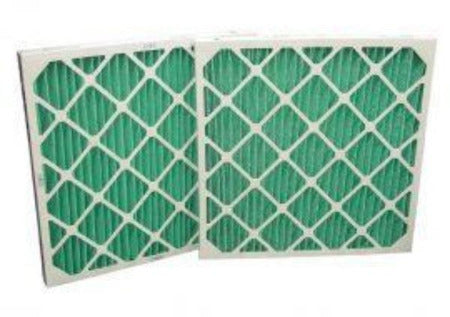
MERVPLUS, MERV 8 Pleated Filter - 1"
- MERVP1020108
- MERVP1220108
- MERVP1224108
- MERVP1420108
- MERVP1425108
- MERVP1520108
- MERVP1620108
- MERVP1624108
- MERVP1625108
- MERVP1824108
- MERVP1825108
- MERVP2020108
- MERVP2024108
- MERVP2025108
- MERVP2030108
- MERVP2424108
- MERVP2430108
$7.57
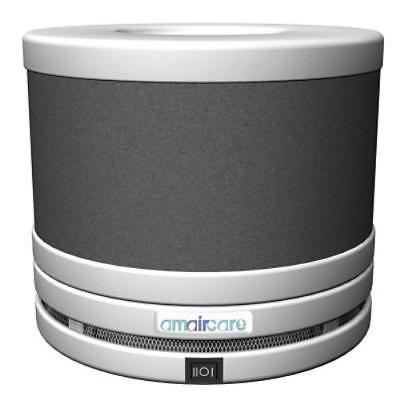
Portable Mini Room HEPA Cleaner
- 03-A-3KWP-00
- 03-A-3KSL-00
- 02-A-3KGR-01
- 02-A-3KOR-01
- 02-A-3KBL-01
- 02-A-3KPK-01